Friday, July 29, 2011

England 2011: An easeful entry

Osterley Park

Friday July 15, 2011

I’m always anxious before flying, but this was one of the smoothest flights ever. An hour shorter because of tail winds, with nary a bump. Air New Zealand’s the best airline I’ve ever flown on – the planes have been redesigned with relatively large seats even in coach, so comfortable. Sat in emergency exit row with nice young English medical researcher working in New Zealand, who encouraged me to try New Zealand films. I watched four entire movies (oddly much more of a distracting diversion from fear-of-flying than reading is for me), and only one, An Education, wasn’t from NZ. That’s the one about the teenage Oxford-bound girl seduced by an older man; I thought it was rather overrated and unconvincing, but at least it kept the attention. The NZ movies were much more alive, particularly Boy, a glowing, feeling story about a Maori boy who idolizes his criminal father. There was also one about a Maori Jesus-like madman, which sounds awful but was sweet, and then a charmer about a Chinese girl secretly marrying a white NZ boy and her family’s disapproval (My Secret Wedding). Didn’t sleep a wink on the flight, but was quite well entertained.

Buddleia in Osterley Park

As the flight got in an hour early, my friend Ron hadn't arrived yet. That gave me a chance to change money and use the internet, and then Ron turned up and whisked me off. Even something that may sound as ordinary as the drive to his house in Peckham Rye was great fun. It was a summery English day, with Constable clouds decorating the sky, and extra-green foliage and purple buddleia everywhere. Our route wound around south of the river, and Ron stopped to show me Osterley Park, a great house I’d never seen. Walking in the extensive park like grounds, with their pond, ducks, swans and weeping willow trees, was ecstacy after nine hours on a plane, and provided a piquantly refreshing contrast to Los Angeles.  I felt I'd been magicked into an English country estate, only 20 minutes from Heathrow and on the way into London, a sleight-of-hand conjured by Ron!

Water-lilies at Osterley Park

Jet-lagged at Osterley Park

Ron and Helena live in a lovely big high-ceilinged Victorian house that opens onto a picturesquely overgrown garden, and we sat outside relaxing in the long golden English afternoon. I was introduced to the cats, whom I’ve known since their birth by email and pictures, and quickly made friends with the exquisitely pretty Tiger Lily, our Pindar’s doppelganger, and her long-legged, elegant grey son Max.

Max

Max's beautiful young mother, Tiger Lily

I also caught a glimpse of Max’s dad, a pretty russet boy with a sadly bad leg, who lurks around the shed. While I feasted my eyes on cats and English verdure (a la Fanny Price in Mansfield Park), Helena feted me with a dazzlingly delicious home made tea, a revelation, infinitely better than you get even in the fanciest restaurants.  There were small scones, Cornish cream, and homemade jam; cucumber and ham and salmon sandwiches; and an airy, orangey, flavory Clementine cake. After that, we all needed naps, to get up strength for a beautiful dinner for a summer evening – a delicate whole salmon trout with boiled new potatoes, avocado cream sauce, zucchini, and a beautiful summer pudding. I sipped elderflower and enjoyed chatting about their English lives and my American one, as much as I could while going in and out of tyrannical waves of jet lagged sleepiness. Never was there a more easeful entry into England!

Helena's High Tea

Saturday. Slept only from 1 to 5 AM, woke up and was too excited to get back to sleep. A grey day, 60s. Breakfasted on lovely granary toast, sweet English butter, homemade marmalade and blackberry jam. Then we drove to Chawton, a couple of hours away. Ron showed me the sights along the route: Dulwich, where the actor Edward Alleyn lived and founded a school, and William Blake claimed to have seen the Prophet Ezekiel under a bush; Clapham, associated with the evangelists; Wimbledon. Soon we were out of the city and driving along grassy meadow flowery fields to Chawton. On arrival, the heavens opened and I had to pull out my flimsy little Californian umbrella. The grass was a bit muddy, but the tents kept the happy crowd dry, and the enjoyment of being at Chawton was undimmed. Examined the books for sale and the Women’s Institute cakes and handmade goods in the church, and chatted with some of the great and the good of the Jane Austen world, Patrick Stokes, Maggie Lane, Elaine Bander, Deirdre LeFaye, Maureen Stiller, Gillian Dow.

Me at Chawton

The Chawton House Library gardens

Then Jan arrived in Maureen’s car, and I was amused at my being able to welcome her, ironically, to Chawton. After the short business meeting, Jan had lunch with the committee and I picnicked in the church pews with Ron and Helena, who had packed a gorgeous curried Coronation Chicken with rice into a French picnic basket. Oddly, the lunch served by the Chawton caterer was also Coronation Chicken, but was no more like Helena’s than a lamp is like sunshine (as Emma compared her playing to Jane Fairfax’s). Helena’s was real chicken curry, while Chawton’s was more mayonnaise with a little curry in it. Then back into the tent to hear Jan’s lively talk about Mr. Darcy and the romantic role he plays in the female imagination. (The “real” Darcy, as written, is not so charming as his property and power.)

Janet Todd gives the Jane Austen Society address

Elaine Bander at Chawton House Library
Visiting scholars' quarters in the remodeled stable block at Chawton

Afterward, Jan left for London, and Elaine showed me the beautifully remodeled stable block where she and the other fortunate visiting fellows stay. The Chawton day closed with Evensong, and then we drove back, me and Helena dozing in the car. Reviving, I went for a walk with Ron who showed me Peckham Rye Common, which was uncommonly beautiful; after which we were ready for what Helena called a “light” dinner, but which was a symphony of more of her beautiful cooking: homemade gazpacho, garlic croutons, salami, mozzarella, granary bread. Played with Tiger Lily, who seemed to understand that I have a cat much like her at home, and cleverly adapted herself to behave just as Pindy does, asking for luxurious pattings of her clever, pretty little head.

Peckham Rye Common gardens

Rainbow at Peckham Rye Common

Sunday

Up at 6, some sunshine, nice day. After coffee, I bid farewell to sweet Helena and sweet cats, was presented with a ravishingly pretty little glass dichroic vase, and then Ron drove me to Paddington. He was so kind – never was such kindness, as Miss Bates said, and he was very much indeed the Mr. Knightley to my Miss Bates, for he actually parked, came inside the station, helped me with my bags, waited as I got food, and helped me look for Jan, who got on the train while we weren’t looking. We had a jolly ride all the way to Penzance, which took a little over 5 hours, arriving at 4:15. Penzance cool and grey, with a lamentable weather forecast for the Scillies. We dined at the Admiral Benbow, a cozy, attractive historical pub that had been highly recommended (you know who you are!), but the food was a terrible rip-off - appetizers (crab, scallops) so miniscule that Jan, who ordered two starters, would have starved if I hadn’t shared my fish and chips. Then we walked back to the Beachfield Hotel, a classic white Victorian hotel on the promenade overlooking the sea. The rooms were overpriced (though the sea views were beautiful) and we felt rather annoyed as there turned out to be a much cheaper annex next door that they don’t tell you about while booking. Still, it was very comfortable and served its purpose, and I went to sleep with the happy sense of a trip begun, and adventures to come.

Penzance, St. Michael's Mount

Beachfield Hotel

Window view


Thursday, July 28, 2011

The Twenty-ninth Trip

Scotland, 1980s

Twenty-nine trips...It's not as excessive as it sounds. Consider: if you are a person who loves another country at least as much as your own, and make it a lifetime priority to visit as often as you can get your money and your body together, then by the time you’re my age, a visit every year or two will easily add up to some number like twenty-nine! The perspective that comes with time, like verdigris flopping out of a whale, operates here too. For it's interesting how my trips to England have varied, according to my age, cumulative experience of the country, and the deepening of my English friendships and literary interests.

Punting in Oxford, 1980s

In my early trips I did standard first-trip things, and each was wildly exciting. London theatre, my first trips to Bath and Oxford, first glimpses of the countryside, first stately home (I think the first I saw was Hatfield). Later, especially after starting to make friends, our trips developed into epic adventures and purposeful odysseys: island-hopping trips in the Hebrides; road trips in search of ancient ruins in Ireland, Scotland, Wales, Cornwall; book shopping orgies; lush stays in castle hotels; seeking-out of writers’ homes, from Dafydd ap Gwilym to Charlotte M. Yonge. Later still, my trips tended to center around Jane Austen, academic conferences, and visits to old friends. The excitement level never diminished:  only grew.

Paul and Peter at Hay-on-Wye, early 1990s

This latest trip was my first since the New Directions in Jane Austen Studies conference in 2009, and it was a glorious synthesis of all the things I love about England. The delight of being there, which has never left me, was mellowed and enhanced by the richness that comes from the burnishing of old friendships. This trip was about renewal, the recapturing of joy after Peter's worrisome health crisis.  But, as ever, there were also new discoveries to be made. Johnson's old saw about if a man is tired of London, he is tired of life, never seemed truer: one could go on for a thousand years, and always find something new and wonderful in the gentle old beauty that is England. My journal will follow, in installments, as a five-part series over the next few days.  

Peter at the Standing Stones of Callanish, 1990s

For this introduction I've scanned an array of pictures from the richness of our trips dating back to my first in 1969, and then from when my regular trips began, in 1980. I have 25 huge fat photo albums! Maybe someday I'll get a decent scanner and digitize them all.  And just think, without photography, all these would be only dim memories.  Looking at the pictures, I see how our trips were our crowning joys, and how happy we were, on every single one.

The first Jane Austen seminar at St. Hilda's College, 1983.  Peter with Jean, the organizer, who became a long time friend - we had lunch last week!

Romantically on the steps in Lyme where Louisa Musgrove fell, in Persuasion.  1990s.
 
An early trip to St. Agnes, the Scilly Isles, 1991.  Our old friends Keith and Anne, and Keith's son Steve.

Me driving a riverboat on a family vacation on the Norfolk Broads, 1990s


Peter on Iona, 1990s


Peter and Paul at Tingagel, 1980s

The Hill of the Witches, a hard-to-find ancient tomb in Ireland. 1990s.

Skara Brae, Orkney. 1990s.

Paul with sheila-na-gigs, Northern Ireland

Peter and his mother, Vivian, the time we stayed at the Royal Crescent Hotel, Bath.

Peter and his mother in the Burren, Ireland

Peter salutes W.B. Yeats.  "Horseman, pass by..."


Happy times at Wellwood Farm, Keith and Anne's home in Kent (1990s)

I had a thing for chickens...

Boxing Day, Wellwood Farm.  With Keith's family, 1990s.

At the pub in Kent

First Pifflefest in Oxford - online friends with "noms" from the Dorothy L. Sayers list. Miss Layton, Miss Snoot, Vamping the Senior Common Room, My Gracious Silence, and me, Miss Schuster-Slatt!

House in Dorset, where we lived in 1969


Pink sea-thrift on an early trip to Scilly Isles (Bryher, 1990s)

With a very small pony in the Lake District

The touristy thing to do in the Aran Islands - but it was fun!

Devonish Island, Northern Ireland


Bodmin Moor

Paul and Andrew with dinner

We always had fun on Wellwood Farm!

More fun at Wellwood

A castle. Somewhere...

Bardsey Island, where a thousand monks are buried. The sheep looks suitably forbidding because the channel is nearly impassible due to currents

Mother and son on holiday in Kent

Trebrea Lodge...a favorite hotel in Cornwall

Bluebell woods, Wellwood Farm, Kent

Grace O'Malley's castle, Ireland

Hotel in Wales

Two silly English friends, the Lake District, 1980s

Monday, June 27, 2011

Early Voices: Portraits of Canada by Women Writers, 1639-1914


Light, Bright, and Sparkling has never been a book blog, as my day job is so close to book blogging that writing book reviews after my week's work is done is far too close to a Busman's (or Bookman's) Holiday.  But it's hard to resist telling about any especially interesting book I read, and I'm inspired by this wonderful new book from Canada, Early Voices: Portraits of Canada by Women Writers, 1639-1914 (Dundurn Press) edited by Mary Alice Downie and Barbara Robertson, with Elizabeth Jane Errington.
 
 Baroness von Riedesel and her children


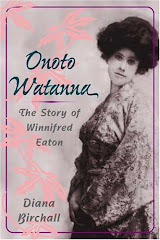
Having an interest in pioneers and frontier life, in the beauty and history of Canada, and in women's lives, for me this book came together as nothing less than a brilliant evocation and illustration of all three. There are of course many anthologies of women writers, Canadian and others, but what makes this one so satisfactory is the exceptionally judicious, felicitous, happy selection. Not growing up or being educated in Canada, one learns shamefully little about Canadian history or literature in school, and I only developed an interest because my grandmother and great-aunt both happened to be pioneering Canadian women authors. My grandmother, Winnifred Eaton (1875-1954) was the first Asian American woman novelist, though she took on a fake Japanese identity and pen name (Onoto Watanna) to write her romantic novels with Japanese settings and titles such as The Heart of Hyacinth and The Wooing of Wisteria. She also wrote two memoir style novels of her early life in Montreal, Me (1915, republished by U. of Mississippi Press) and Marion (1916, reprint forthcoming from U of McGill Press), and two novels of Calgary prairie life in the period between the two world wars, Cattle and His Royal Nibs. Her career was flamboyant and fascinating, and the greatest professional joy of my life was researching and learning about her, and publishing my biography Onoto Watanna (U of Illinois Press, 2001). But even my partisan delight in my fabulous granny cannot blind me to the fact that her older sister, Edith Eaton, is generally seen as the more noble character and arguably finer writer. Both sisters were among the fourteen children of an Englishman and his Chinese wife, and sensitive, idealistic Edith was very sympathetic to her mother's plight as a scorned ethnic minority. Both sisters suffered from prejudice as being "half-caste," but where "Winnie" took the veiled method of creating some sympathetic Asian heroines, Edith fought for justice and equality for the Chinese community in her writing, her journalism, and her social work. Writing under a Chinese pen name, Sui Sin Far, she is now called "the spiritual foremother of contemporary Eurasian authors."

Sui Sin Far, my great-aunt

What ancestors for a nice Jewish girl to have, and I am inordinately proud of them! It was Sui Sin Far's inclusion in this collection that led me to it, but that's not the only, or even the main reason for my very great enjoyment of the book.  For that matter, the book is rather cavalier about my grandmother ("We regard the discovery of half-Chinese Sui Sin Far, also known as Edith Maude Eaton, as a triumph. The novelist and journalist, Onoto Watanna, looked promising, until we discovered that she was Sui Sin Far's sister Winnifred, masquerading as an exotic half-Japanese"). No, it is because it serves an introductory purpose better than I have ever seen any related anthology do. As a non-Canadian, I had heard of a few of these women authors, and had even read the books of arguably the most famous, Catherine Parr Traill. I wanted to know more of these remarkable early-Canadian stories, but most selections give you only a thumbnail, so you're left not really "knowing" the author.  Or else they give you dull excerpts, so you don't want to know more about the author! Not so here. Each of these excerpts is vital and alive, intensely vivid journalistic prose, that has a "you are there" effect of putting you in the picture. You start reading and the modern world disappears, and you're back in 19th century Canada, with refined and educated women who have been put down almost in the middle of nowhere, and who respond in a variety of fascinating ways. You could seek out and read the full versions of these women's writings, and I have no doubt that I will, but this book also feels quite complete in itself.  The selections are so inspired that the reader becomes absolutely rapt in the stories, and when you lift up your head and close the book, you find that you really have learned a great deal! To paraphrase Mr. Eliott in Persuasion on his idea of good company, "that is not a good book, that is the best."

Anna Brownell Jameson

And who are these women? They are nothing if not diverse. The editors have not chosen a group who all sound the same, a collection of Catherine Parr Traill clones, but women of different backgrounds who had very different experiences in early Canada.  Elizabeth Jane Errington writes, "We still tend to see New France, British North America, and 19th century Canada as worlds inhabited by strong men and silent women." Nothing could be farther from the case than this eclectic collection, in which we find such voices of vitality.

There's Mary Barbara Fisher (1749 - 1841) whose husband fought in the American Revolution, and as Loyalists they fled to Nova Scotia. A manuscript by her daughter details the settlers' first cruel winter and shows a certain anti-American animosity, for she writes, "There were no domestic animals in our settlement at first except one black and white cat, which was a great pet. Some wicked fellows, who came from the States, killed, roasted and ate the cat, to our great indignation." This depredation seems less horrific when you read the account of how stunningly little the settlers had to eat!

I liked the description by Baroness von Riedesel (1746-1808), wife of the general in command of the Hessian troops, of an 18th century freezer:

"At the beginning of November people lay in their winter provisions. I was very surprised when people asked me how much fowl, and particularly how many fish I wanted and where I should like to have the latter left, since I had no pond. In the attic, I was told, where they would keep better than in the cellars. Accordingly I took three to four hundred, which kept very well through the winter. All that had to be done when a person wanted meat, fish, eggs, apples, and lemons for the midday meal was to put them in cold water the day before. Thus the frost is thoroughly removed, and such meat or fish is just as juicy, even more tender than that we have at home. In addition to this, poultry is packed in snow, which forms such a crust of ice that one must chop away with a hatchet."

A little later the Baroness tells a story of some Indians who kept coming to a settler named Johnson saying they dreamed he gave them rum and tobacco. He gave them all they wanted, but one day went to them and said he dreamed they gave him a certain large piece of land. They held council and told him, "Brother Johnson, we give you the piece of land, but dream no more."
Baroness von Riedesel

Anna Brownell Jameson (1794-1860) the Irish-born wife of the Attorney General of Upper Canada, left him and returned to England where she became a critic and champion of women's rights, but her Winter Studies and Summer Rambles (1838) seems to be a charming account, in which she tells of a tempestuous, wet night spent on a rock in Lake Huron. Later, reaching an inn in Toronto, she rejoiced in a luxurious little bedroom with white curtains, but adds, "but nine nights passed in the open air, or on rocks, and on boards, had spoiled me for the comforts of civilization, and to sleep on a bed was impossible: I was smothered, I was suffocated, and altogether wretched and fevered; I sighed for my rock on Lake Huron."

Indian lodges sketched by Anna Jameson, 1837

Toronto Harbour sketched by Anna Jameson, 1820

It is Anne Langton, from an educated family connected to the Brontes and the Stricklands, who perhaps most graphically details the constant chores of pioneer life. She ran the first school and circulating library in Upper Canada, but after being delivered a load of tallow that she (already with a great deal of work on hand) must form into candles, admits, "I have sometimes thought, and I may as well say it, now that it is grumbling day - woman is a bit of a slave in this country."

Anne Langton

I will tell some more about this fabulous collection of women's writings in another post, but in the meantime,  suffice it to say, that if you are inclined to read one book about women writers in Canada:  this is the one.